.webp)
Area Attractions


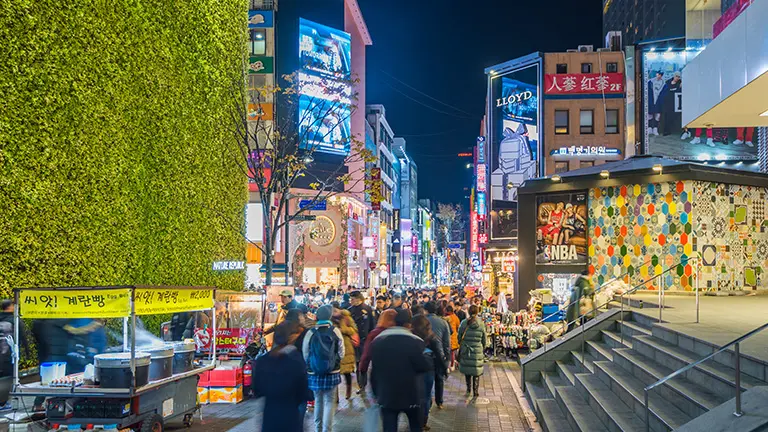
Myeongdong Shopping Street
Myeongdong is a bustling shopping district with a wide range of shopping options. It is stretched out across about one kilometer, running from Myeongdong Station on Subway Line 4 to Euljiro and LOTTE Department Store. It is home to many brand stores, department stores, and unbranded shops. As a fashion mecca, you can find a huge range of items like clothes, shoes, accessories, and more. It’s known to offer more high-quality brands than the Namdaemun or Dongdaemun areas.
[Korea Tourism Organization: http://api.visitkorea.or.kr]
[Korea Tourism Organization: http://api.visitkorea.or.kr]
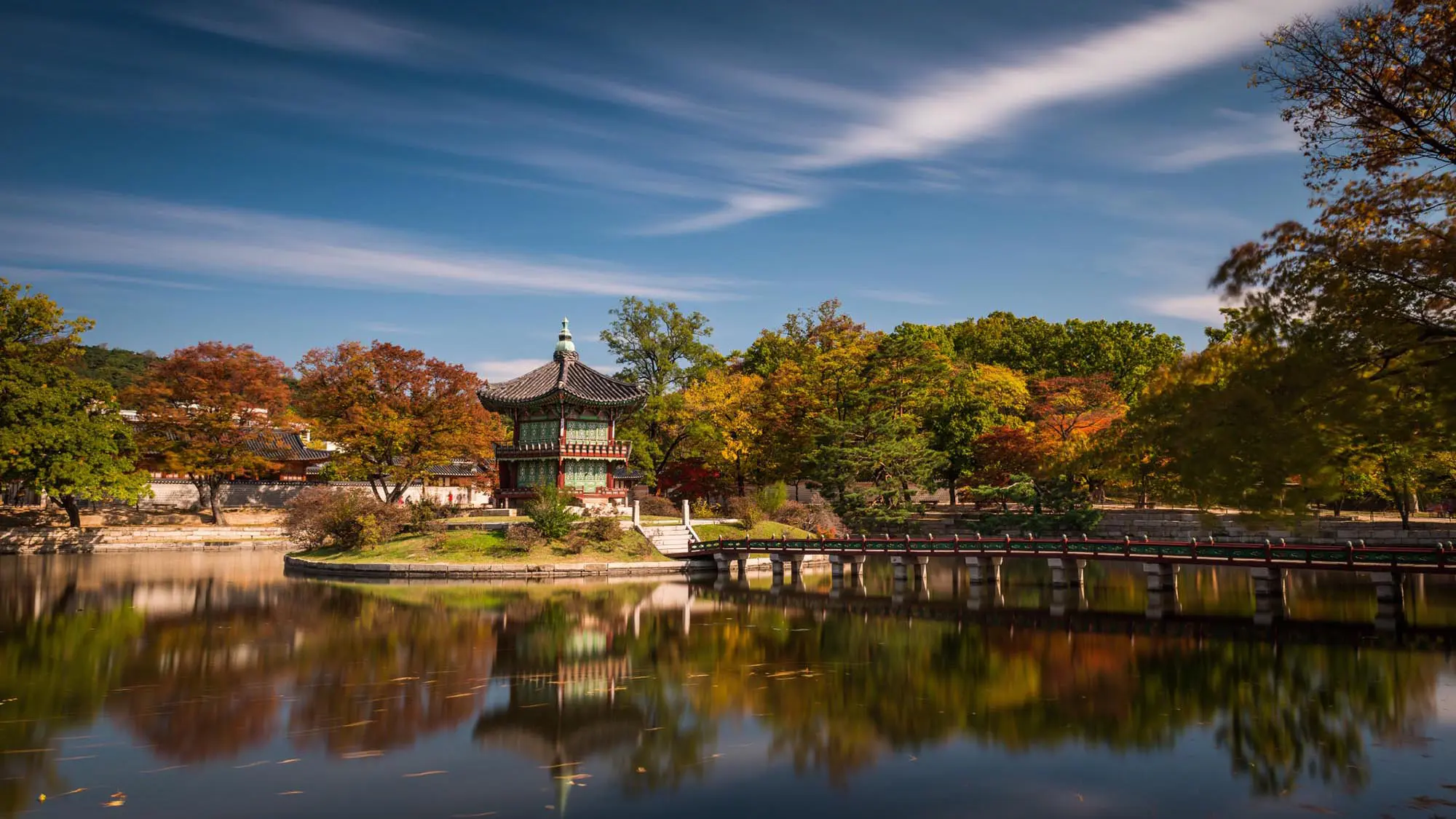
Changdeokgung Palace (Changdeokgung Palace and Huwon Garden)
Changdeokgung Palace (Historic Site No. 122) was a separate palace built after Gyeongbokgung Palace in 1405. It was also called the “East Palace,” due to its location on the east side of Gyeongbokgung, the main palace. After Geumcheon Bridge was built in 1411, Donhwamun Gate was built in 1412. From the time of the 9th king of Joseon, Seongjong, several kings made it their residence and it became the main palace. During the Japanese invasions of Korea, Changdeokgung Palace was burned down.
[Korea Tourism Organization: http://api.visitkorea.or.kr]
[Korea Tourism Organization: http://api.visitkorea.or.kr]
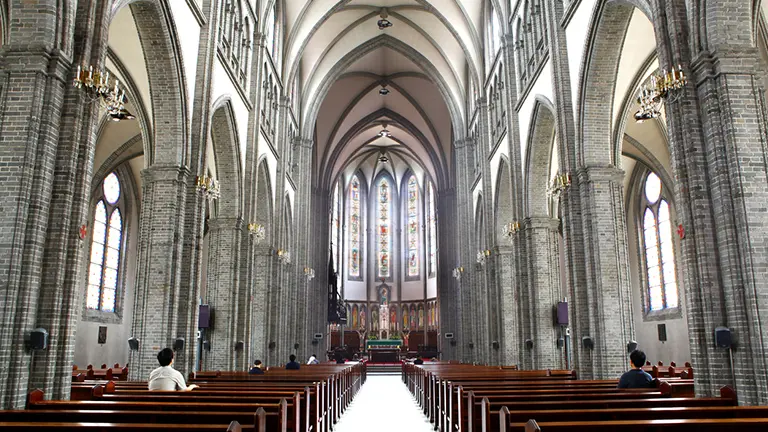
Myeongdong Cathedral
Myeongdong Cathedral, the seat of the bishop of the Archdiocese of Seoul, is the birthplace of the Korean Catholic Church community, the representative place of worship for Korean Catholics, and the final resting place for the remains of martyred saints. It is the first Gothic-style monument in Korea and is designated Historic Site No. 258. The construction of Myeongdong Cathedral was begun in 1894 and completed in 1898, making it the first brick church in Korea built in the classic Gothic style. During the military regime, it became widely recognized as a center for the pro-democracy struggle. The cathedral’s crypt is a holy place where the remains of martyrs such as Bishop Imbert, Father Maubant and Father Chastan are interred.
[Photo Credit (Bum-su Lee) - Korea Tourism Organization: http://api.visitkorea.or.kr]
[Photo Credit (Bum-su Lee) - Korea Tourism Organization: http://api.visitkorea.or.kr]

N Seoul Tower
N Seoul Tower has been one of South Korea’s leading tourist destinations and a symbolic Seoul landmark for over 40 years.
The tower’s height and unique structure, which is visible from all over Seoul, have made it an object of interest and affection for Seoulites. Over time, it has successfully established its position as the number-one attraction for domestic and foreign visitors. In recent years, it has become known as a film location for various entertainment shows and dramas that have driven the Hallyu K-wave and made it a must-see tourist venue.
The tower’s height and unique structure, which is visible from all over Seoul, have made it an object of interest and affection for Seoulites. Over time, it has successfully established its position as the number-one attraction for domestic and foreign visitors. In recent years, it has become known as a film location for various entertainment shows and dramas that have driven the Hallyu K-wave and made it a must-see tourist venue.

Bukchon Hanok Village
Traditionally known as Bukchon, a “yangban” (nobleman’s) neighborhood, the houses here are all Joseon-era tile houses that are preserved to this day, retaining their aristocratic architectural style. Originally, there were only a few large houses with towering gates and about 30 hanoks - traditional Korean houses - in the neighborhood, but it grew to its current state after the end of the Japanese occupation and the restoration of Korea after the Korean War.
[Korea Tourism Organization: http://api.visitkorea.or.kr]
[Korea Tourism Organization: http://api.visitkorea.or.kr]